Some family members might be interested to learn that 19 Pond Street, the “Grandma Riley house,” was sold last September for $449,000.
The seller was Yi Goo, and the buyer was 19PondSt, LLC. Time marches on.

It looks a bit different nowadays

Some family members might be interested to learn that 19 Pond Street, the “Grandma Riley house,” was sold last September for $449,000.
The seller was Yi Goo, and the buyer was 19PondSt, LLC. Time marches on.
It looks a bit different nowadays
It was on this May 28th day in 1862 that Patrick Riley and Rose Kiernan set foot in the United States.
Patrick and Rose first left Ireland and traveled to Liverpool, England. I do not know how long they stayed in Liverpool. It was typical for the emigrating Irish to first book passage to Liverpool, where they would hopefully gain employment and secure enough money to purchase passage to New York. Patrick and Rose did not process through Ellis Island because it was not established as an arrival center. We can determine they traveled in steerage class because the passenger list had them in the last group departing the ship.
It appears they were not married at the time because Rose traveled under her maiden name and both were listed as single.
Judith A. Mulligan was born on this date in 1938 to Margaret Ernestine Riley (1910-1989) and Walter Francis Xavier Mulligan (1906-1957). Judy, born in Pawtucket, lived in the area all of her life. She was the first born of the four Mulligan children, with her siblings being: Martha, Paula and Kevin Francis Xavier.
In her early twenties, Judy married David T. Moore and had two children, Susan Moore and Kathryn Moore McBride. Here is Judy’s wedding announcement photo from the Providence Journal:
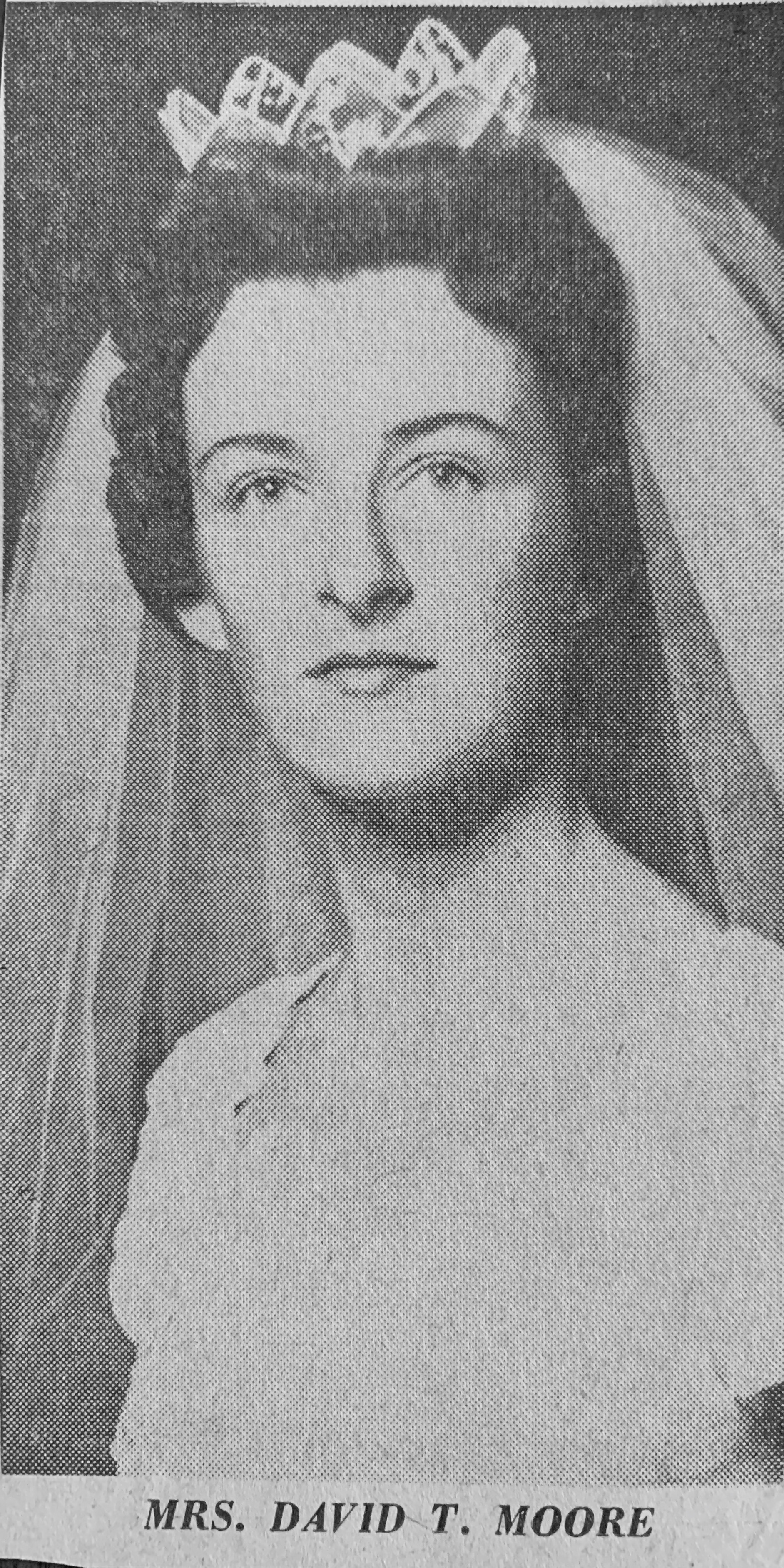
Judy passed away on November 13, 1962 at the age of 24.
“Lá Fhéile Pádraig sona dhaoibh” (pronounced “law fay-leh paw-drig sonna deev) – Happy St. Patrick’s Day to all!*
*Mike Collins
mike@youririshheritage.com
Your Irish Heritage, Old Abbey, Waterfall, County Cork, Ireland
Joan Louise (Riley) Daley would have been 93 today (1929-2019).
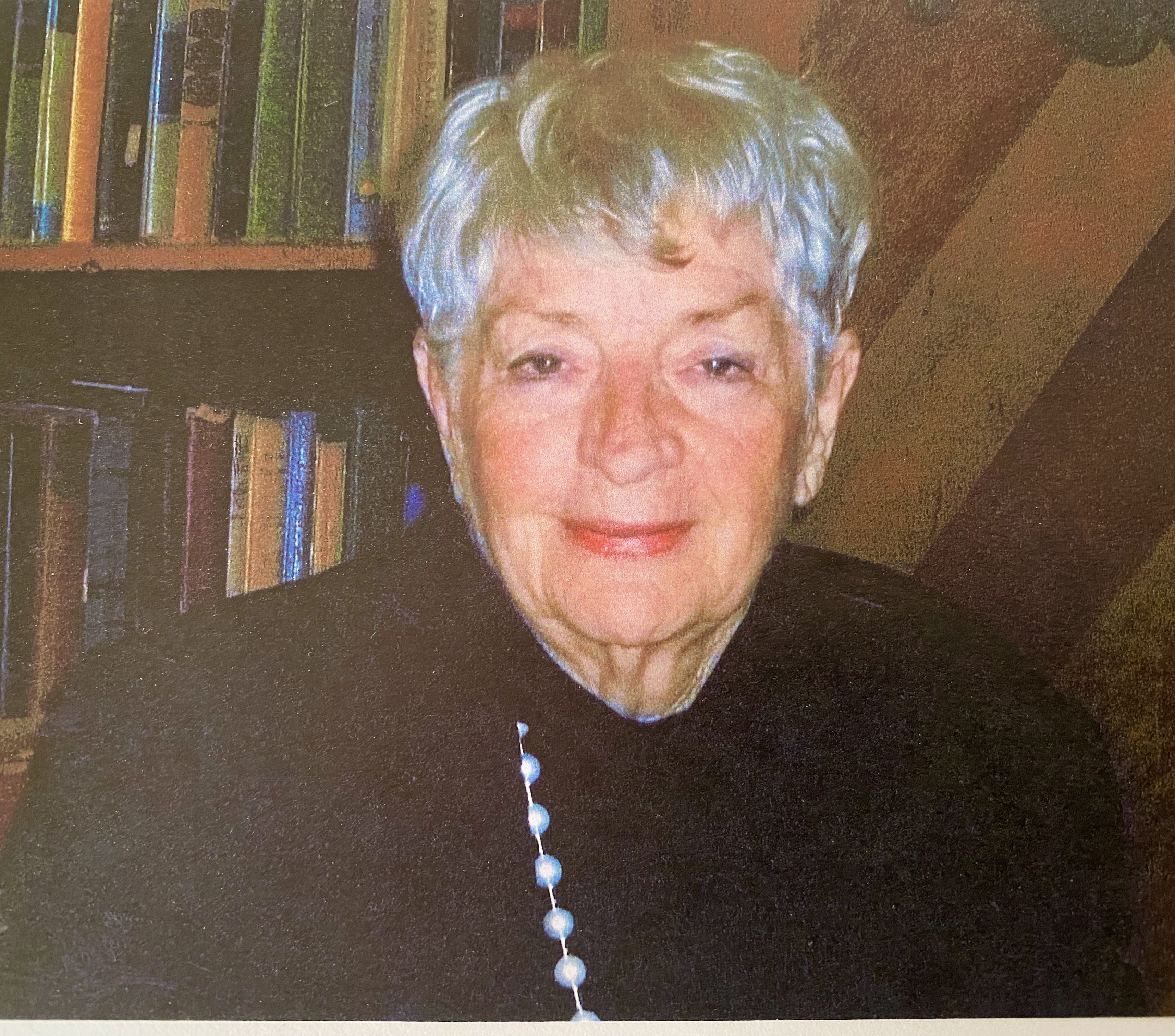
Rest In Peace, Joan.
*see blog posts: March 4, 2021; March 4, 2020, March 4, 2019
I thought this would be an appropriate and a fun read for today.
The following post is taken whole, or in part, from a posting by Mike Collins’, Green Room,
Your Irish Heritage, Old Abbey, Waterfall, County Cork, Ireland.
Saint Valentine of Dublin.
“If you ever have a chance to visit Whitefriar Street in Dublin City, do take a few moments to head into The Church of Our Lady of Mount Carmel. The chances are that you will not be alone. It is likely that you’ll see a few couples through the day – stopping at a shrine on the right side of the church. This is where you will find the remains, and relics, of Saint Valentine – many couples come here through the year to ask for his guidance in their lives together.”
The Light Comes with a February Flower.
“Very little is known about Saint Valentine. In fact, it is unsure as to whether he was a single person or a combination of a few early Saints. However, we are not going to let the facts get in the way of a good story! One of my favourite legends of Saint Valentine goes something as follows.
Valentine was a Christian citizen of early Rome who possessed special healing abilities. One day, a jailer arrived to see him, accompanied by his young daughter who had been blind from birth. He had heard of Valentine’s healing powers, and was wondering if he could cure even this permanent situation. Well, Valentine gave the man ointment for her eyes and asked for her to return each week.
Over time, he also became a teacher to the little girl – he described the world around them, and the world of books – and over time she learned to see the world through his eyes. Even though the little girl’s sight was never restored during this time, the girl and her father returned each week. One week, Valentine was no longer there – he had been arrested for his religious beliefs, and his medicines were destroyed by the authorities. He had also been sentenced to death. From his prison cell, Valentine wrote one last note to his little friend – and handed it to the jailer for his daughter. Valentine was executed the following morning.
The jailer went home and gave this note to his little girl. She opened it and felt a flower inside – and, as the little girl pointed her eyes down to the flower in her hand, she saw the brilliant colours of a yellow Crocus flower for the first time in her life! Her eyesight had been restored. She asked her father to read the message. All it said was: “From your Valentine.” And so we have the tradition of giving tokens of friendship and love at this time of the year. Now, isn’t that a story worth believing? Perhaps all those couples in Whitefriars church in Dublin are looking for a similar light in their life together.”
Happy Valentine’s Day, Everyone!
Paula Mulligan Kostycz, daughter of Margaret Ernestine Riley (1910-1989) and Walter Francis Xavier Mulligan (1906-1957), has a birthday today. Paula is living in southwest Florida, where today’s expected temperature will be about 73 degrees and the skies partly sunny. I’d say that’s just about perfect birthday weather.
Paula is the third born of the four Mulligan siblings. Her sisters are Judy (1938-1962), and Martha, and she has one brother, Kevin. Then, there was that man from Chicago, John Kostycz, who sadly passed away last July. Paula and John had been married for over 50 years.
I recently discovered a photo of Paula and John dancing away at Kathy and my wedding, which is posted below
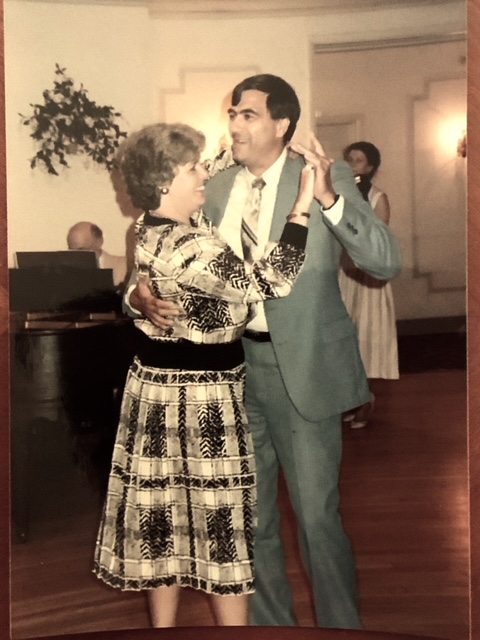
Happy Birthday, Paula!
Brian Lightfoot Brown*, son of Patricia (Riley) Brown, has called our attention to the Boston Marathon’s recognition of Indigenous Peoples Day as a federal government holiday. In doing so, the Boston Marathon is honoring Brian’s grand uncle the late Ellison “Tarzan” Brown (1913-1975) of the Narraganset Tribe, who twice won the Boston Marathon.
Here is a copy of a photo Brian sent along to 19pondstreet.
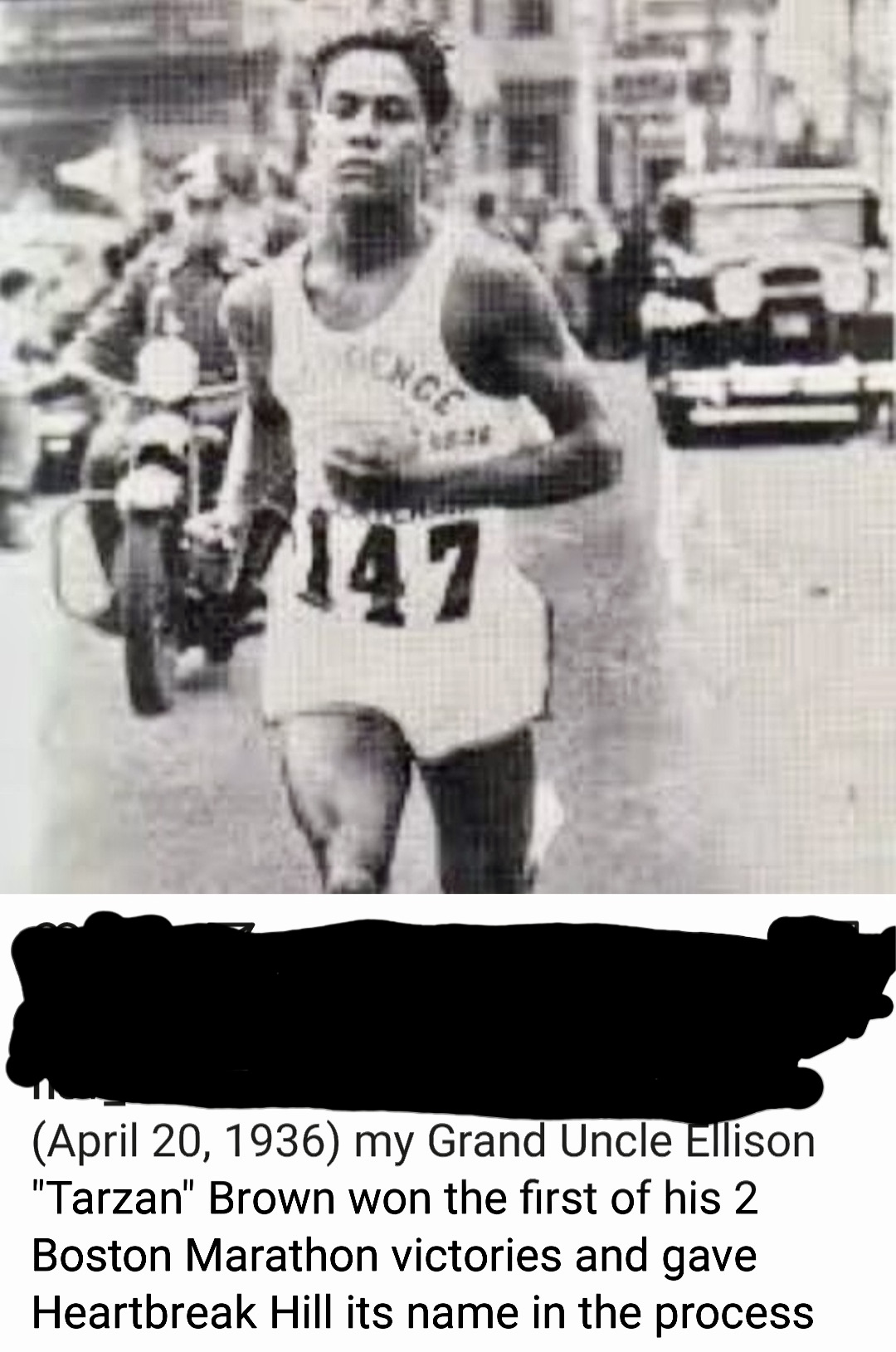
I have included a previous Associated Press news article which was published in September – prior to today’s event.
“BOSTON (AP) — Organizers of the Boston Marathon publicly apologized for running the 125th edition of the planet’s most celebrated footrace on Indigenous Peoples Day.
Now they’re seeking to make amends by throwing the spotlight on a member of Rhode Island’s Narragansett tribe who won the race twice in the 1930s and inspired the name “Heartbreak Hill” to describe the most iconic — and dreaded — section of the course.
The Boston Athletic Association, which administers the marathon, said Monday it will honor the legacy of the late Ellison “Tarzan” Brown, Boston’s champion in 1936 and 1939, in the run-up to the race’s pandemic-altered Oct. 11 staging.
The Boston Marathon traditionally is held in mid-April on Massachusetts’ unique Patriots’ Day holiday. In 2020, it was canceled in its traditional format for the first time because of the coronavirus pandemic, and because of a resurgence of COVID-19 cases, it’s being run this year in the autumn rather than the spring.
Next month’s running falls on Indigenous Peoples Day — observed in some places as an alternative to Columbus Day — and that rankled enough people for the BAA in August to issue “sincere apologies to all Indigenous people who have felt unheard or feared the importance of Indigenous Peoples’ Day would be erased.”
Massachusetts does not officially recognize Indigenous Peoples Day, but Newton — which lies on the marathon course — does.
Eighty-five years after his historic first win, Brown’s descendants cheered the recognition of their acclaimed ancestor.
“Running and winning the Boston Marathon was something grandpa loved,” said Anna Brown-Jackson, a granddaughter of Brown.
“Being an Indigenous person meant everything to Grandpa because he was very competitive to begin with,” she said. “If someone told him he couldn’t do something, whether it was winning the marathon or crossing through a path of land to gather shellfish for his family, he’d make sure to prove them wrong and do it.”
Patti Catalano Dillon, a member of the Mi’kmaq tribe, a three-time Boston Marathon runner-up and a former American marathon record holder, also will be honored at next month’s race.
Brown, whose tribal nickname was Deerfoot, set a world record with his second victory at Boston and represented the U.S. in Hitler’s 1936 Olympics in Berlin alongside the great Jesse Owens.
But he’s best known for bursting onto America’s nascent distance running scene in his initial victory in 1936, when multiple Boston champion Johnny Kelley was heavily favored to win.
Media reports from 1936 say Brown had established a commanding lead in the 26.2-mile (42.2-kilometer) race when Kelley caught him near the 20-mile (32-kilometer) mark in the Newton hills. Kelley, it’s said, gave Brown a patronizing pat on the back as if to say, “Nice try — I’ll take it from here.”
That backfired badly. Brown took off, leaving Kelley in his dust and breaking his heart.
“He ran like a bat out of hell,” The Boston Globe reported at the time. Brown won in 2 hours, 33 minutes, 40 seconds; three years later, in his second win, he was the first to break 2:30 with a time of 2:28:51.
Brown became an instant hero to native people across North America. But like other top Indigenous athletes of his era, he struggled greatly with discrimination and marginalization.
In 1975, he died at age 60 after he was deliberately run over by a car in the parking lot of a Rhode Island bar.
___
Follow AP New England editor Bill Kole on Twitter at https://twitter.com/billkole.“

Judith A. Mulligan was born on July 17th in 1938 to Margaret Ernestine Riley (1910-1989) and Walter Francis Xavier Mulligan (1906-1957). Judy, born in Pawtucket, lived in the area all of her life. She was the first born of the four Mulligan children, with her siblings being Martha, Paula and Kevin Francis Xavier.
In her early twenties, Judy married David T. Moore and had two children, Susan Moore and Kathryn Moore McBride.
Judy passed away on November 13, 1962.
Rest In Peace, Judy.
Jordan, great grandson of Margaret Riley Mulligan (1910-1989) and grandson of Judy Mulligan Moore (1938-1962) had a birthday this week on Wednesday the 22nd.
Here is a video of Jordan Boogie-woogie’n at Providence College in his freshman year. Jordan is now in his junior year.
Jordan’s parents, Kathy and Bob McBride, are rightly proud of their accounting major, music minor Friar.
Belated Happy Birthday, Jordan!
Catherine Marie Fleury, daughter of Nancy [Fleury] Orlando and Anthony F. Orlando was born on this day in Providence, Rhode Island. ‘Cat” is the granddaughter of the late Barbara [Riley] Fleury (1927-2015) and the late Richard ‘Dick’ Fleury (1928-1992).
Cat grew up in Bristol, graduated from the University of Rhode Island and has recently been pursuing graduate studies.
Happy Birthday, Cat!
Kathleen Agnes Riley Mulligan was born in Pawtucket, Rhode Island on this day in 1899 – one hundred and twenty-two years ago.
see blog post dated April 15, 2019
In this morning’s Providence Sunday Journal (3/21/21), the following article appeared. It was written by John Walsh, who frequently authors thoughtful reflections for the paper’s readers. I thought you might enjoy his latest, especially if you have had the experience of visiting Ireland’s countryside.
*******************************************************************************************************
‘Sláinte!’ Appreciating random act of kindness in Ireland
John Walsh Guest columnist
Dan Slattery and I stood on the side of the road, 19 miles from Killarney, where our train was scheduled to depart in less than two hours. On break from school in Dublin, we had spent a week hitchhiking around the Ring of Kerry, the famed route on Ireland’s southwestern coast. A slate-gray sky was quickly turning charcoal; soon it would be dark.
The rev of a car engine teased us; the green Escort was traveling in the wrong direction for our purposes. As it barreled by, the driver and passenger waved out of open windows. “Good luck!” one shouted.
“I guess we could go to the church,” I said, pointing to a solemn steeple rising above the town of Kenmare in the distance.
Dan wiped the afternoon’s “soft rain” from his glasses with a handkerchief. “They’d have to take us in, right?” he said. He didn’t sound convinced.
I’d found myself marooned in Ireland before. In September, on the first day of classes, I had been standing at a curb in Dublin for 20 minutes when a white compact car pulled up.
“Waiting for the bus, are you?” the man at the wheel said, craning his head out the window. I nodded.
“Drivers went on strike last night,” he said. “Where are you going?”
The kindly Dubliner gave me a lift to school. When I asked him if the bus drivers had announced the strike beforehand, he cackled.
“Why would they do a thing like that?” he said out of the side of his mouth, his lit cigarette waving at me like a teacher’s ruler. “Defeats the purpose, doesn’t it?”
It had been my very own “We’re not in Kansas anymore” moment.
Back on the side of the road with Dan, time passed, but few cars did. A cow mooed from a nearby pasture.
“She’s mocking us,” I said. “Moooove!”
It had taken us two days to hitch our way out of Caherdaniel, a small village on the outer reaches of the Ring, and we had to break the law to do it. After our repeated pleadings for a ride, a lorry driver delivering milk to the village’s only store finally relented.
“Lie down in back and keep your heads low,” he said, pointing to his truck bed. He told us the Gardai – Ireland’s national police – would revoke his license if they caught him transporting anyone.
The milkman brought us to his next stop, a chic hotel. There, Dan and I pooled our last soggy pound notes and hired a taxi. We had enough fare to reach Kenmare, one town short of our destination. The unsmiling driver opened the back doors of his black Mercedes Benz for us, bedraggled

as we were. The car’s warm cabin and soft leather seats were an instant narcoleptic.
“Here you go,” the driver said half an hour later, waking Dan and me. We clambered out of our temporary sanctuary and onto the roadside again.
It was 1980. There were no cellphones, no Zipcars, no public transportation circling the Ring of Kerry. At this point, Dan and I were wholly dependent on the kindness of strangers.
And then two appeared. The green Escort that had sped past us in the wrong direction now returned.
“Still here, are you?” the driver said, his car idling.
We explained our predicament.
“Hop in,” he said. “We’ll get you to your train alright. Might even have time to stop for a jar.”
Before dropping us at the quaint Killarney railway station, our rescuers treated us to pints of Guinness at a nearby pub.
Dan and I raised our glasses – to the lorry driver, to the black Mercedes, and especially to the fine lads sitting across from us. “Sláinte!”
John Walsh (john@walshadv.com), a monthly contributor, is a partner in the East Greenwich-based communications firm Walsh & Associates.
JOHN WALSH
Most people think that on March 17th we celebrate Saint Patrick’s birthday, but that’s not the case. In 461 A.D., Saint Patrick, the Christian missionary, bishop and apostle of Ireland, died at Saul, Downpatrick, Ireland (now Northern Ireland).
The History Channel tells us, (what better source is there?) Patrick was “born in Great Britain, probably in Scotland, to a well-to-do Christian family of Roman citizenship, Patrick was captured and enslaved at age 16 by Irish marauders. For the next six years, he worked as a herder in Ireland, turning to a deepening religious faith for comfort. Following the counsel of a voice he heard in a dream one night, he escaped and found passage on a ship to Britain, where he was eventually reunited with his family.
According to the Confessio, in Britain Patrick had another dream, in which an individual named Victoricus gave him a letter, entitled ‘The Voice of the Irish.’ As he read it, Patrick seemed to hear the voices of Irishmen pleading him to return to their country and walk among them once more. After studying for the priesthood, Patrick was ordained a bishop. He arrived in Ireland in 433 and began preaching the Gospel, converting many thousands of Irish and building churches around the country. After 40 years of living in poverty, teaching, traveling and working tirelessly, Patrick died on March 17, 461 in Saul, where he had built his first church.”
Typical, celebrating death seems to have always been a specialty of the Irish.
A Bit of Trivia
Whispered at many a gathering or even in a family parlor, ” Oh, geez, not another one named Patrick.” Well, in our Riley family tree and its branches, the name Patrick has been scribbled on birth and christening certificates many a time. My father, a Patrick himself, used to say the name was chosen because of the family’s lack of imagination. But, according to the Irish genealogical website I follow, A Letter From Ireland , that might not necessarily be the case.
A Letter From Ireland states, “It has been a tradition in Ireland for many centuries, that anyone born in the month of March has a good chance of being given the name Patrick or Patricia.
That was not always so. Right up until the early 1700s, Patrick was considered too saintly a name to be taken by the masses. That, of course, has changed. By the 1901 census there were almost 300,000 Patricks on the island but only 173 Patricias – the use of the female version is quite a recent development.
In Ireland today, there are almost “40 shades” of Patrick and Patricia:
For Patrick, you will find: Pádraig, Páraic, Paudie, Padge, Pauric, Podge, Pat, Paddy, Patsy and Pa (substitute an “aw” sound for the Irish “á” – that should sound about right).
For Patricia, you will find: Pat, Patsy, Tricia, Trish, Pádraigín and Patrice (for some reason, Patty never caught on here in Ireland).”
So You Say You’re Looking For An Irish Film…
Here’s a random list:
Beannachtaí na Féile Pádraig ort! (Ban-nock-tee na fayla pawd-rig urt).
Saint Patrick’s Day Blessings on you – and all of your family!
Kathryn (Kathy) Moore was born on this date to the late Judith (Judy) A. Mulligan (1938-1962) and David Moore. Her late grandmother, a real sweetheart, was Margaret (Riley) Mulligan (1910-1989).
Kathy* and her husband, Robert McBride, were married in Jamestown, Rhode Island. Imagine, not being married in Pawtucket! 19pondstreet had a nice birthday shoutout last month for their son Jordan,** who is continuing his studies at Providence College.
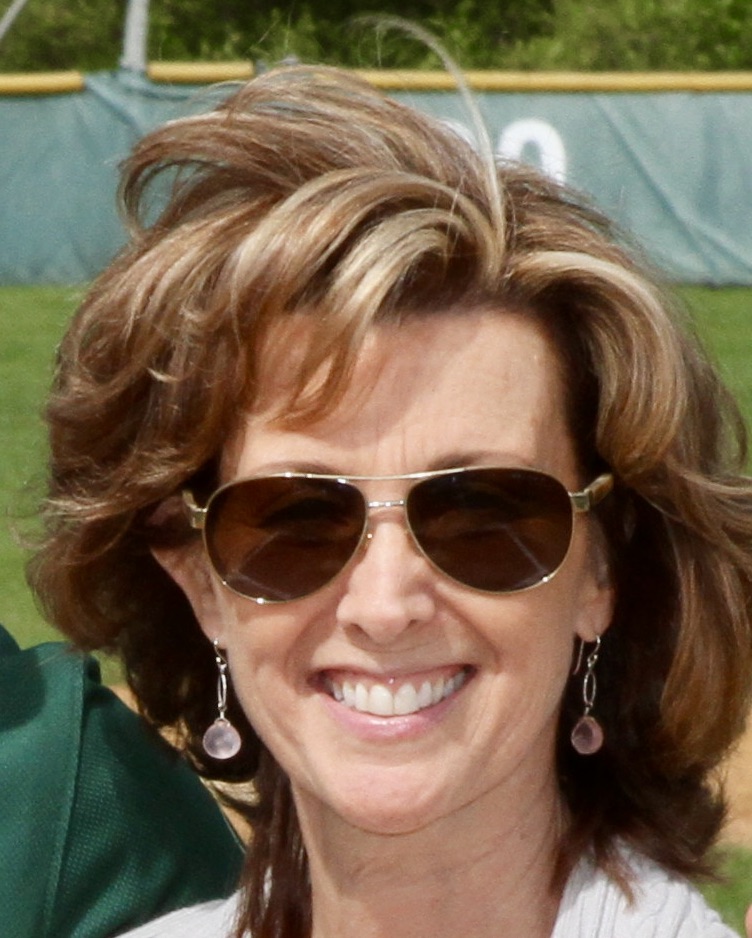
The photo below really reflects Kathy’s ever pleasant personality, great smile and wonderful outlook on life.
 19 Pond Street